


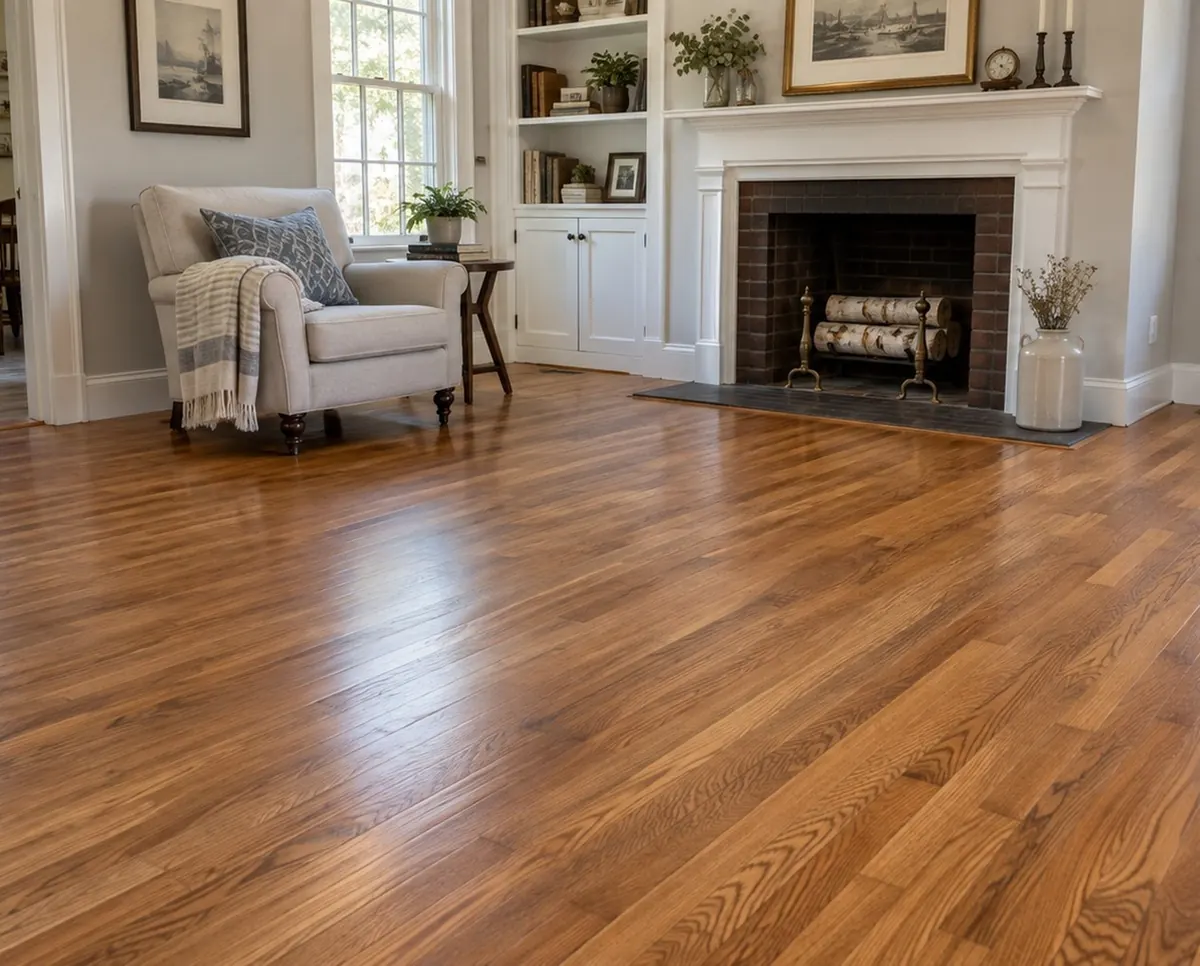
A scratched, dull or gray floor looks like a floor that is finished. Most of the time it is not. What you see is worn finish and a tired top layer of wood, and both can be dealt with without tearing anything out. Before you price a new floor, it is worth finding out what the one you have still has to give.
What sanding and refinishing actually do
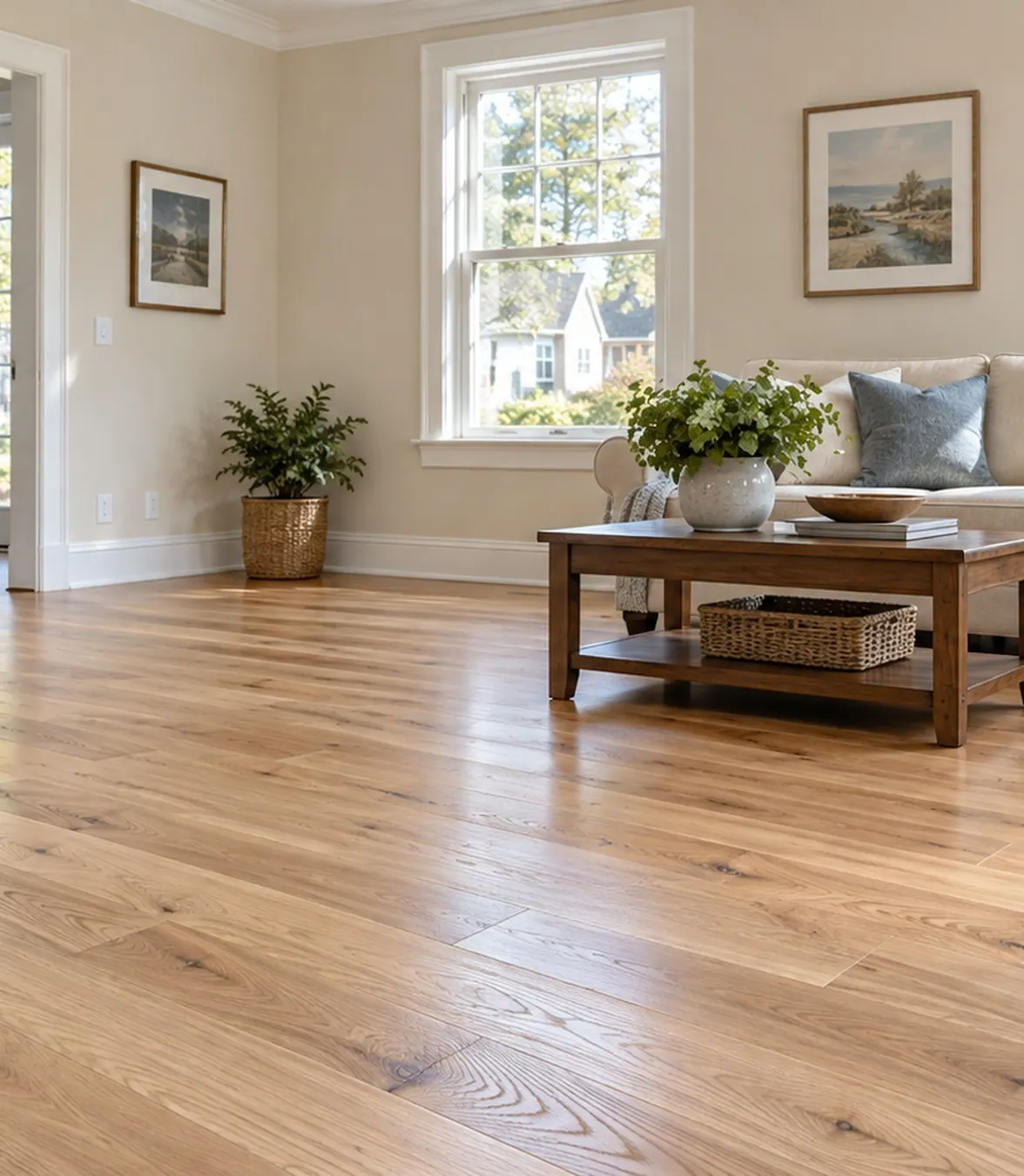
Sanding takes off the old finish and a thin layer of wood with it. The scratches, the stains near the surface and the dull traffic lanes go with that layer, and what is left is fresh wood. Refinishing then seals and protects that wood and brings back the color and the shine. You can keep a natural finish or choose a custom stain if you want a different tone. It is the same floor, with a new surface.
Because the boards stay where they are, refinishing usually costs a fraction of a full replacement. There is no demolition, no new material for the whole room and no change in floor height at the doorways.
Signs your floor can be restored
- Surface scratches and scuffs. If they sit in the finish or just below it, sanding removes them.
- Dull or gray traffic lanes. The finish has worn through and the wood is exposed. It looks bad, but it is usually a surface problem.
- Light stains and sun fading. Marks that stay near the surface come out with the top layer. Color differences under rugs even out once the whole room is sanded.
- A color you no longer like. A new stain changes the tone without changing the floor.
- Boards that are solid underfoot. No soft spots, no movement, no rot.
When replacement is the better call
The honest answer depends on how much wood is left. Every sanding removes material, and a board can only give so much. On solid hardwood, what matters is the wood above the tongue. On engineered hardwood, it is the top layer of real wood, and some products have very little of it.
- Nail heads or tongues showing. The floor has already been sanded close to its limit.
- Boards that are cupped, warped or soft from water. Sanding does not fix wood that has changed shape or started to rot.
- Dark stains that go deep. Some marks run through the board and will still be there after sanding.
- Movement or damage below the floor. If the subfloor is the problem, a new finish will not solve it.
Often the answer is somewhere in between: replace the boards that are past saving, then sand and refinish the whole room so it reads as one floor.
What to check before you call
You can learn a lot in a few minutes. Lift a floor vent or look at a doorway threshold where the edge of a board is visible, and see how much wood sits above the groove. Walk the room and note where it squeaks, dips or feels soft. Look for dark stains near radiators, exterior doors and the dishwasher. Take photos in daylight. None of this replaces a look in person, but it tells us where to start.
Ask us before you replace
New Generation Flooring has more than ten years of work in Massachusetts homes, and sanding and refinishing is one of our services. We look at the floor, tell you plainly whether it can be restored, and give you a clear price either way. Call or text (857) 251-8071 with the room, the floor you have now and a few photos. The estimate is free.

Comments (0)
Be the first to comment.